A good session feels organised without being rigid. Players know what to expect, but the leader can adjust the pace, activity and level of support according to who is there and how they feel that day.
The example below is based on a one-hour playing session. Timings are a guide rather than a target.
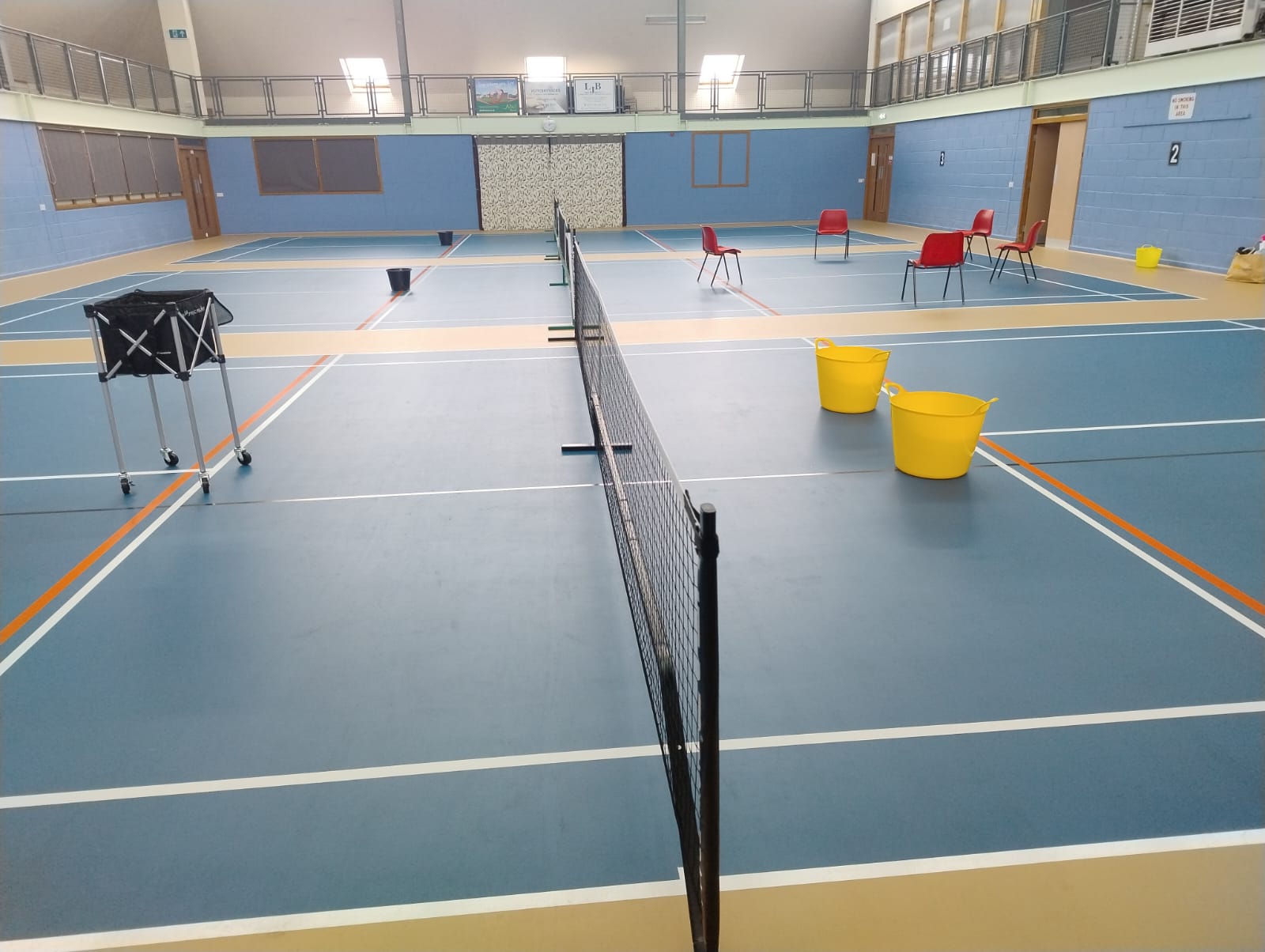
Before players arrive, set out each court with the equipment needed for the session. In this example, three courts have ball baskets or flexible buckets nearby and chairs spaced out for the warm-up. Once the warm-up is complete, move chairs that are not needed away from the playing area to remove trip and collision hazards. Keep some seating safely positioned at the side for anyone who needs to rest or use a chair for support.
1. Welcome and check-in
Allow time for players to arrive, find a seat and settle in. Welcome newcomers, introduce the session leaders and volunteers, and explain where the toilets, drinking water, first-aid kit and defibrillator are located.
Privately invite players to tell the session leader about anything relevant to their participation. Remind everyone that they can take a break at any time and may use an alarm if they need a medication reminder.
Before play, quickly check that the courts are dry and free from bags, loose balls and other trip hazards.
2. Warm-up
Begin with five to ten minutes of gentle movement. Have stable chairs available for seated exercise, rest or balance support, and make sure the leader is visible to everyone.
The example below shows a group warming up while standing. Offer seated versions of the movements as well, and let each player choose the position and range of movement that works for them that day.
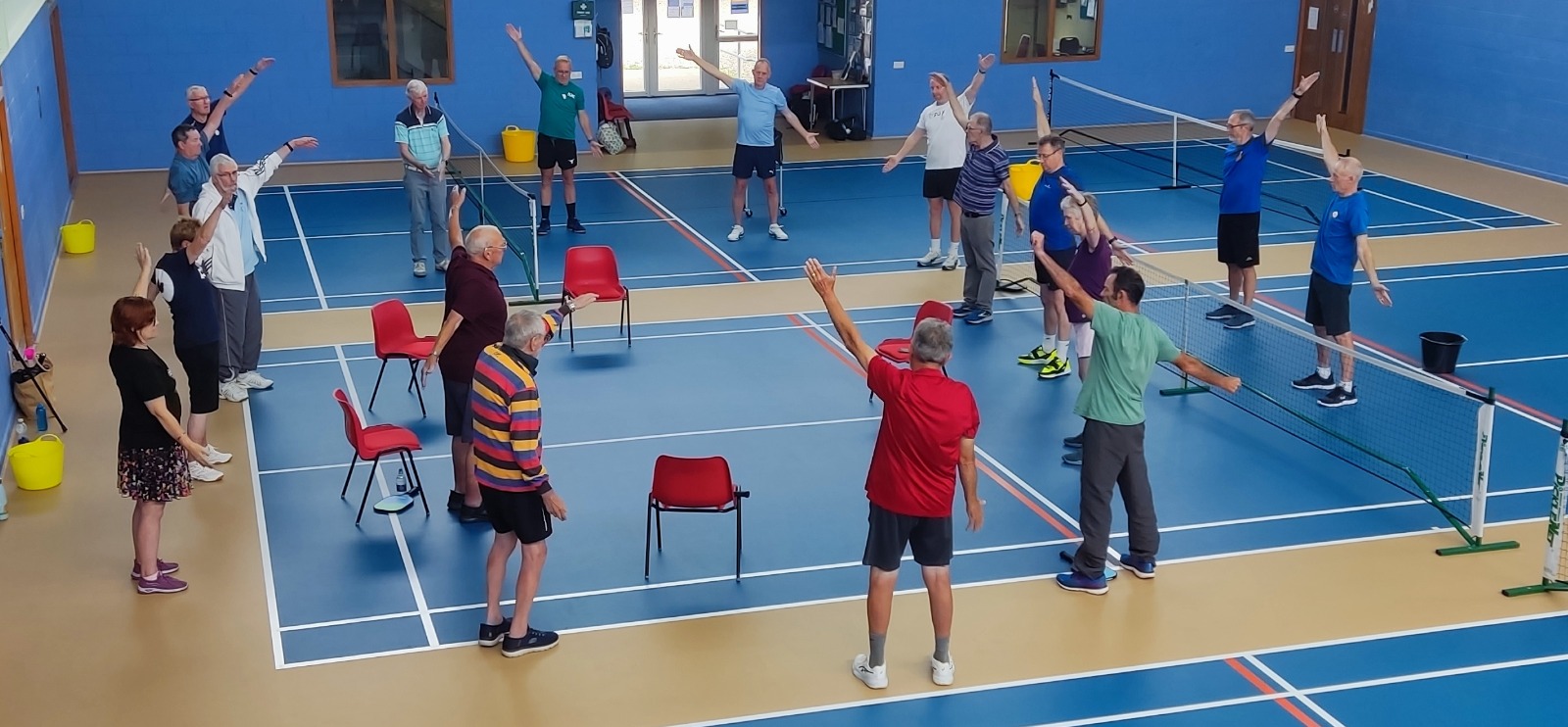
A warm-up might include:
- Slow head turns and shoulder rolls
- Opening the arms to stretch the chest
- Gentle reaches and upper-body turns
- Supported knee lifts
- Side steps with a gentle inner-thigh stretch
- Supported toe lifts
- Slow breathing with controlled arm movements
Encourage tall posture, comfortable movement and steady breathing. Players should work within their own range and stop if something feels wrong.
3. Skill practice
Introduce one or two skills rather than trying to cover the whole game. Early sessions might focus on:
- Week one: dinks and the drop serve
- Week two: volleys and groundstrokes
- Week three: game positioning and simple strategy
Use a balanced ready position: feet comfortably apart, knees soft if appropriate and paddle held in front. Encourage players to watch the ball, move into position with purposeful steps and regain balance before hitting.
For a dink, a helpful reminder is KPOW: knees, pendulum, out in front, watch the ball.
4. Practice matched to each group
Players with more limited mobility may begin with a volunteer feeding the ball gently from directly in front. This reduces the need to reach, bend or move suddenly. Hand feeds can progress to paddle feeds, then to cooperative rallies.
More mobile players can work in pairs, practise lateral and forward movement, and build towards short games. Targets such as a large tub can make controlled dinking practice playful and rewarding.
If there are enough volunteers and nets, dividing players by current mobility and experience can help everyone receive an appropriate level of challenge. These groups should remain flexible; players may move between them over time or from one session to the next.
5. Break
Plan at least one break and keep extra breaks available. Encourage water, provide seats and allow enough time for anyone who needs to take medication.
Avoid assuming that every player benefits from stopping at exactly the same time. For some people, an interruption can make restarting difficult. Ask the individual what works best and adapt the format where practical.
6. Adapted games
Finish the playing time with cooperative rallies, dinking games or short matches. Games to seven points or timed rounds of around seven to ten minutes can work well.
Agree the adaptations before starting. These might include a smaller court, no lobs, no backward running, an optional second bounce or a closer serving position. Rally scoring can make an introductory game easier to follow, even if the group later learns standard scoring.
Keep the emphasis on control, positioning and enjoyment rather than speed.
7. Cool-down and catch-up
End with gentle breathing and comfortable movements. Then make time for a social catch-up—sometimes called “après pickleball”—with tea, coffee or refreshments if the venue allows.
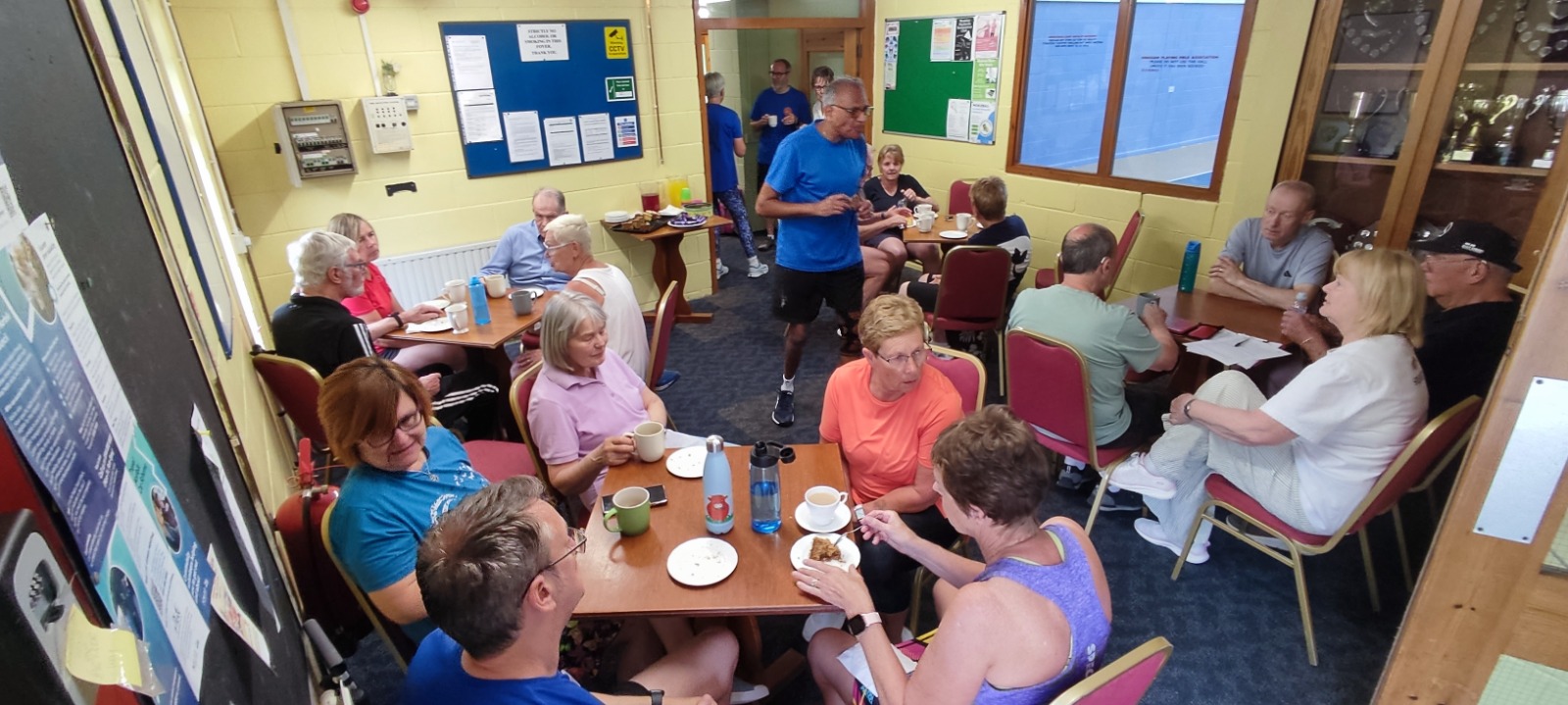
This is also a useful informal debrief. Ask players and volunteers what felt good, what was difficult and what they would change next time. That feedback should shape the next session.