You do not need to have every detail solved before you begin. Start with a safe, manageable taster session, listen closely to players and volunteers, and build the programme around what you learn.
1. Form a small organising team
Identify a lead organiser and enough people to cover coaching, safeguarding, first aid, registration, court support and refreshments. Confirm which club policies and venue procedures apply.
Beginner-level coaching may be delivered by appropriately qualified pickleball leaders, with more experienced coaches supporting where needed. Make sure everyone understands the limits of their role: session leaders adapt pickleball activity but do not give individual medical advice.
2. Speak to people with Parkinson's
Involve prospective players early. Ask what would make a session welcoming, what practical barriers they face and what kinds of support work for them. Avoid designing the programme around assumptions about diagnosis or age.
Local Parkinson's UK groups can be a particularly effective way to reach people and gather insight.
3. Secure a suitable venue
Look for:
- A level, well-lit, non-slip playing surface
- Clear space around each court
- Step-free access where possible
- Nearby toilets and drinking water
- Seating on or close to the courts
- A first-aid kit and known emergency arrangements
- A quieter social space for conversation after play
- Consistent weekly availability, ideally indoors
Complete the club's risk assessment and agree how incidents will be recorded and handled.
4. Plan equipment
A practical starter kit includes:
- Lightweight paddles with a generous sweet spot
- High-bounce balls in a colour that contrasts with the floor and walls
- Enough balls for feeding drills—more than normal match play requires
- One ball basket or bucket per court
- Smaller flexible tubs for collecting balls or target practice
- Stable chairs for rest, seated movement and balance support
- Optional suction attachments for picking up balls
- Optional larger or silicone paddle grips
- Optional eye protection
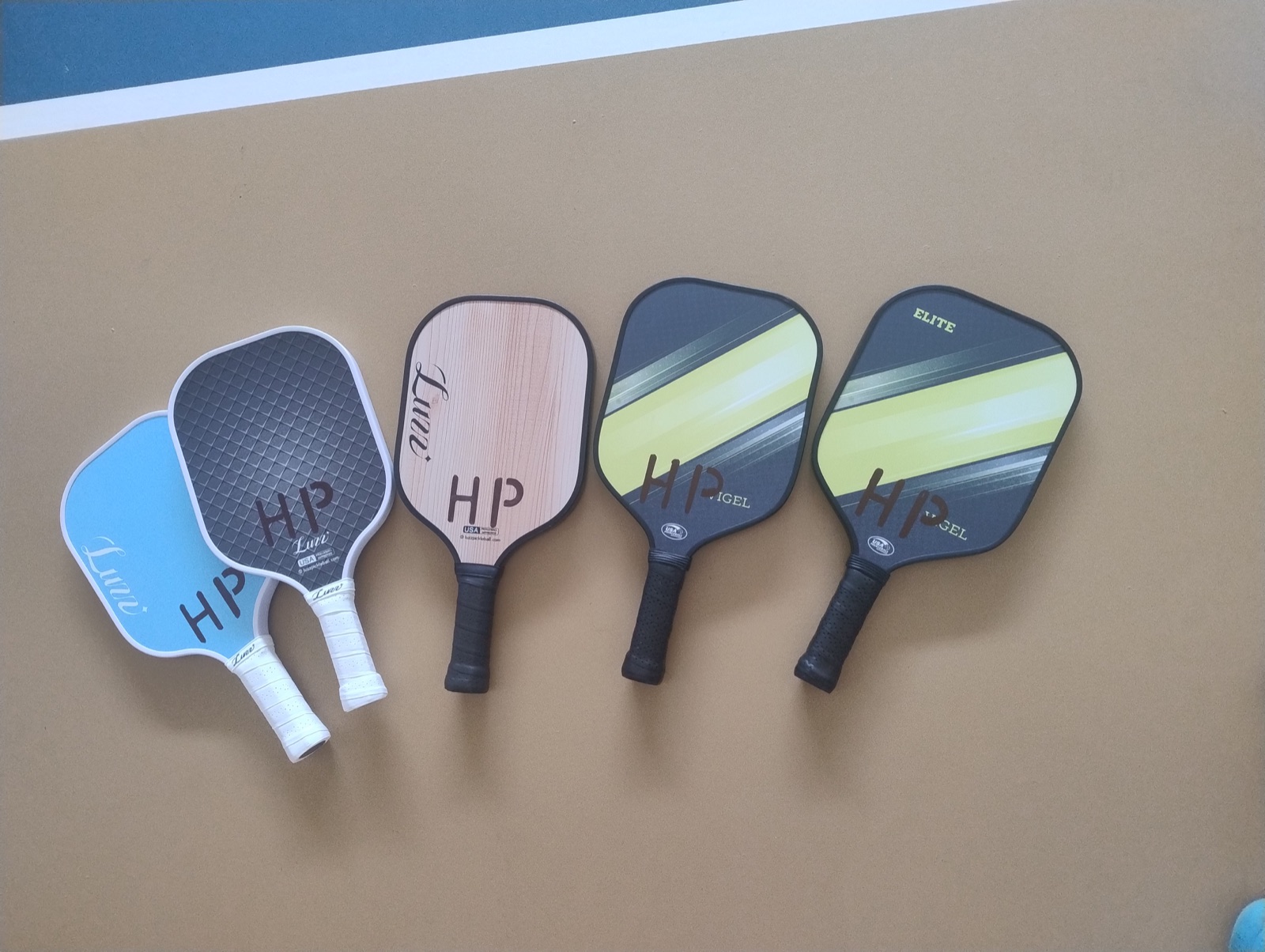
Players should be asked to wear supportive, non-slip court shoes and bring water. Do not rely on foam balls without testing them in the venue; their weight and bounce may not suit the group.
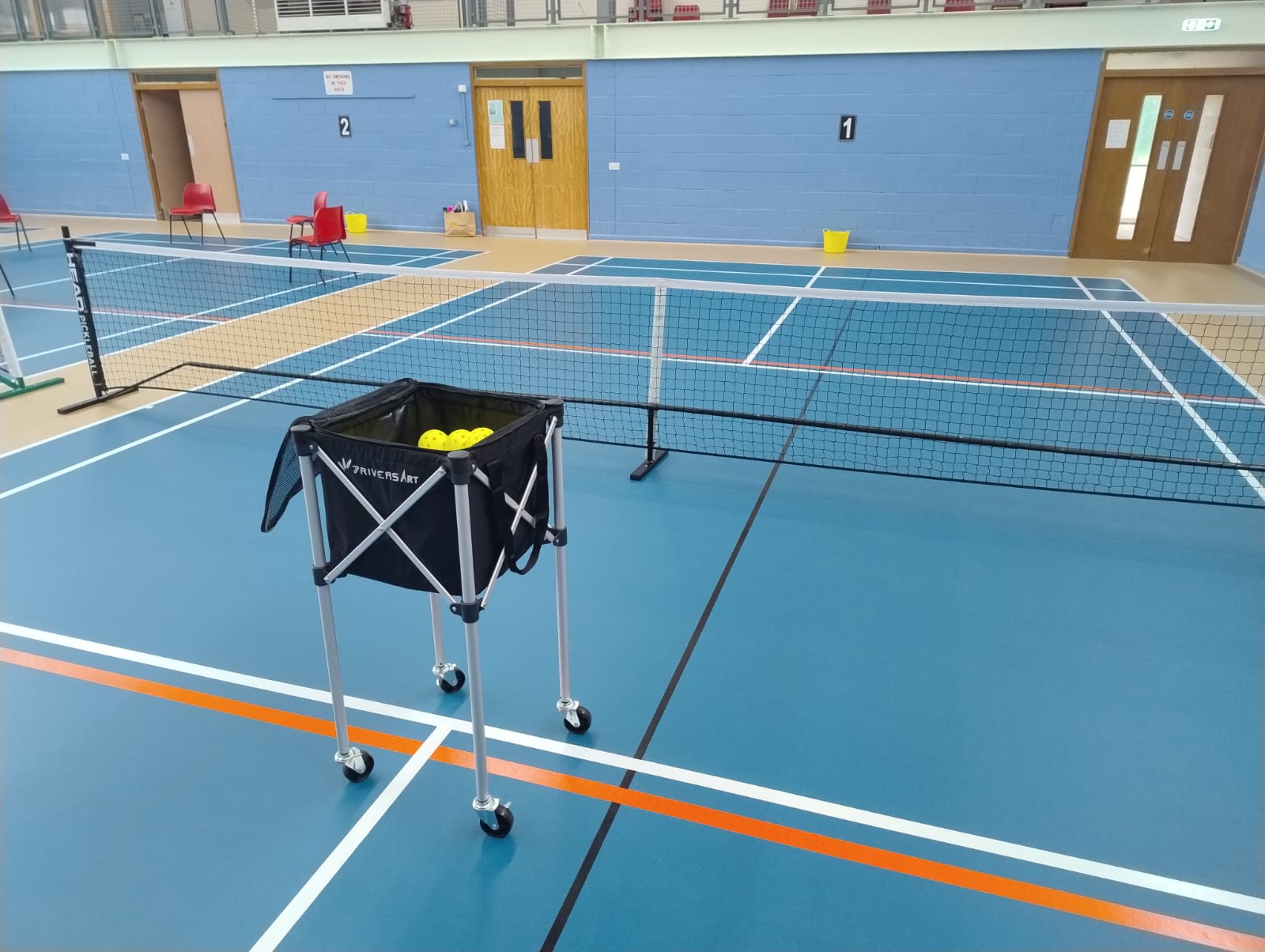
5. Recruit and brief volunteers
Early sessions may need a high volunteer-to-player ratio. Volunteers can feed balls, collect stray balls, demonstrate drills and provide encouragement. A player with limited mobility may benefit from one-to-one support.
Brief volunteers to feed accurately and gently, keep balls off the court, avoid pulling or unexpectedly steadying players, and ask before offering physical help. As players gain confidence, review whether the same level of support is still needed.
6. Create a flexible registration process
Collect emergency contact details, relevant consent and the information required by your club's policies. Make a digital sign-up available, but keep a paper or assisted option for anyone who finds online registration difficult.
Use bookings to plan courts and volunteers, while allowing players to withdraw at short notice when symptoms or energy levels change.
Ask only for information needed to support participation, explain how it will be used, keep it secure and provide a private way to discuss it.
7. Build a safe session plan
Prepare a simple structure with:
- Arrival and check-in
- A gentle warm-up with seated options
- One or two coached skills
- Drills matched to current ability
- Planned and flexible breaks
- Short adapted games
- A cool-down
- Social time and feedback
Document the adaptations your group may use, such as no lobs, no backward running, a reduced court or an optional second bounce. Make sure all players understand the agreed rules.
8. Run a taster session
A taster lets people meet the team, see the venue and try simple shots without committing to a full programme. Supply equipment and focus on a positive first experience rather than teaching every rule.
Start slowly. The first several weeks may contain more coaching and drills, with full games introduced gradually where appropriate.
9. Promote the group locally
Prepare a short, accessible introduction for:
- Local Parkinson's UK groups
- Parkinson's nurses, neurologists, physiotherapists and occupational therapists
- GP practices and pharmacies
- Community and leisure organisations
- Local press and social media
Be clear about the venue, accessibility, cost, equipment provided, who the sessions are for and how to enquire. Avoid claiming that pickleball treats or slows Parkinson's.
10. Plan funding and sustainability
Budget for venue hire, equipment, refreshments, training, insurance and accessible communications. Possible sources include Parkinson's charities, Sport England programmes, local councils, community funds and business sponsors.
See potential funding sources for a Pickleball for Parkinson's group for current places to look, practical application guidance and ideas for local support.
Keep participant charges as low as practical. Some people living with a long-term condition may find a weekly fee a barrier.
11. Review and improve
After each session, gather brief feedback from players and volunteers. Review attendance, near misses, incidents, equipment, volunteer numbers and the suitability of each activity.
Expect the group to evolve. Players may progress into different practice groups, require fewer adaptations or join other club sessions. Keep a pathway open without making progression a condition of belonging.