All physical activity carries some risk. A good Pickleball for Parkinson's session does not ignore that risk; it plans for it, explains it clearly and adapts activity to the person taking part.
This article is general guidance, not a substitute for a club risk assessment, appropriately trained leaders or individual medical advice.
Before someone joins
Provide a clear description of the activity, venue and likely level of exertion. If a person has not been active for some time, has significant mobility limitations, is very prone to falls or has another health concern, encourage them to speak to a GP, physiotherapist or other healthcare professional who knows them before beginning a new activity.
Ask each player what support works for them. Do not assume that a diagnosis tells you their ability. Give people a private way to share relevant information and collect only what the club needs to support participation and respond in an emergency.
Falls and loss of balance
Fast changes of direction, reaching and moving backwards can increase the chance of a fall.
Ways to reduce the risk include:
- Do not allow backward running; let an unreachable ball go
- Remove lobs from adapted games
- Encourage deliberate sideways and forward steps
- Ask players to move early, establish balance and hit the ball in front
- Use a comfortably wide ready position where appropriate
- Reduce the court size or limit movement during early drills
- Offer an optional second bounce to give more response time
- Provide stable chairs for rest, seated exercise and balance support
- Use accurate feeds from directly in front for players with limited mobility
- Place a briefed volunteer nearby when one-to-one support is appropriate
Volunteers should ask before providing physical help and should not unexpectedly pull, catch or steady a player unless responding to an immediate emergency.
Trips and collisions
Loose balls, bags, bottles and wet patches create avoidable hazards.
- Inspect the court before the session
- Keep personal belongings away from the playing area
- Collect loose balls promptly
- If a ball enters a court, stop play and stand still before locating it
- If a ball rolls onto another court, call “ball on” rather than chasing it
- Leave adequate run-off space around boundaries and between activity areas
- Position players and volunteers so neighbouring drills do not overlap
Fatigue, dizziness, pain and changing symptoms
Energy and symptoms can vary from day to day and during a session.
- Encourage players to stop if they feel dizzy, unwell or in pain
- Make breaks available whenever needed
- Provide seating, drinking water and cups
- Begin slowly and increase activity gradually
- Use shorter games or timed rounds
- Allow last-minute booking changes
- Ask before changing a routine; for some players, stopping at the wrong moment can make restarting difficult
If someone develops sudden or severe symptoms, follow the venue's emergency plan and seek appropriate medical help.
Medication timing
Taking Parkinson's medication on time can be important. Make it acceptable for players to set an alarm, pause and take medication according to their own prescribed schedule. Session leaders should not change or advise on medication.
Strains and overuse injuries
Warm up before playing and cool down afterwards. Encourage controlled technique: use the paddle face to guide the ball, avoid excessive wrist flicking, do not overreach and prioritise placement over power.
Increase duration and intensity gradually, particularly for anyone returning to activity. Players should use any brace or personal support recommended for them by an appropriate healthcare professional.
Footwear, balls and eye injuries
Ask players to wear supportive, non-slip sports shoes suitable for the surface. Choose a ball colour that contrasts clearly with the floor and background, and make sure lighting is good.
There is a risk of being hit by a ball or paddle. Keep enough space between players, use controlled feeds and shots, and offer suitable eye protection. Explain the option clearly even if players choose not to use it.
Bending to collect balls
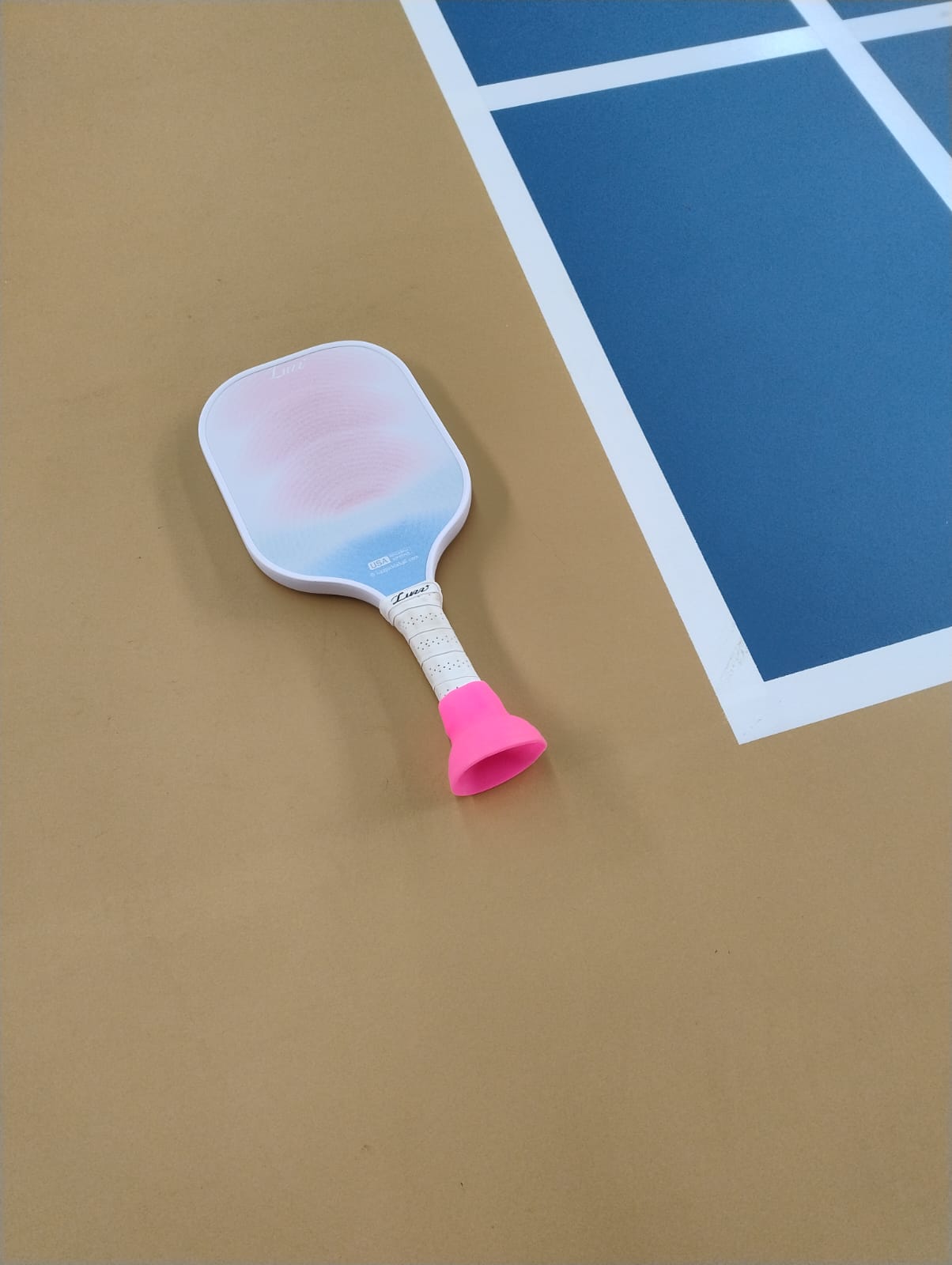
Repeated bending may be difficult or unsafe for some players. Volunteers can collect balls, and suction attachments on paddle handles may help some people. Ask the player which approach they prefer rather than assuming they need an aid.
Emergency readiness
Before every session, leaders and volunteers should know:
- Who is responsible for first aid
- Where the first-aid kit is kept
- Where the defibrillator is and how it is accessed
- The venue's emergency address and procedure
- How to contact a player's emergency contact when appropriate
- How incidents and near misses are recorded
Keep a charged phone accessible. Never delay calling 999 in an emergency.
Review, learn and adapt
Safety planning is continuous. Debrief after sessions, record incidents and near misses, and ask players what helped or caused difficulty. Review court layouts, rules, volunteer numbers and drills as the group changes.
For further information, see Parkinson's UK's physical activity guidance and Pickleball England's Adaptive Pickleball guidance.